
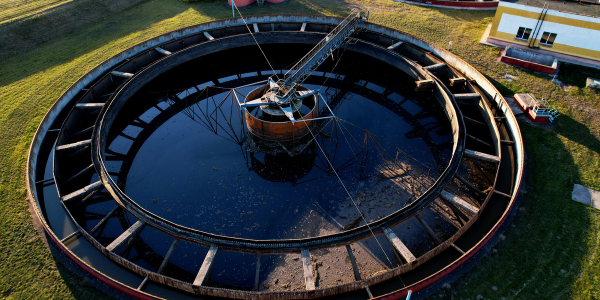
Preliminary treatment is the first step in wastewater treatment designed to remove large debris and materials that could interfere with the efficiency of the subsequent treatment stages.
Importance: Preliminary treatment is essential because it protects the equipment downstream and prevents blockages in the treatment system. Removing large solids also helps improve the efficiency of the rest of the wastewater treatment process.
In primary treatment, the focus is on removing suspended solids that remain in the wastewater after the preliminary screening.
Importance: Primary treatment significantly reduces the amount of solid material in the water, but it does not eliminate dissolved pollutants like chemicals, bacteria, or nutrients. However, it serves as an essential first step in making the wastewater easier to treat in the next stages.
Secondary treatment is a critical stage in the wastewater treatment process, where biological processes are used to break down organic matter in the water.
Importance: Secondary treatment is vital for reducing the levels of organic matter and nutrients in wastewater, making it suitable for further treatment or safe discharge into the environment. However, it may not be enough to remove all harmful substances, especially in industrial wastewater.
Tertiary treatment is the final step in wastewater treatment, used to remove any remaining contaminants and improve the quality of treated water.
Importance: Tertiary treatment is vital for industries and municipalities that need to meet strict water quality standards before discharging the water back into rivers or using it for non-potable applications, such as irrigation.
The final step of the wastewater treatment process is dealing with the sludge that is generated during the primary, secondary, and tertiary treatment stages.
Importance: Sludge treatment is essential to manage the residual waste generated during the treatment process. Proper management ensures that the sludge does not contribute to pollution or harm the environment.
Preliminary treatment is the first stage of wastewater treatment. It uses screens to remove large materials such as plastic, leaves, and sticks, followed by grit removal to separate sand, gravel, and other heavy particles that could damage treatment equipment.
During primary treatment, wastewater enters sedimentation tanks where heavier suspended solids settle at the bottom. Oils, grease, and other lighter materials float to the surface and are skimmed off. This stage reduces the solid load before biological treatment begins.
Secondary wastewater treatment uses microorganisms to break down biodegradable organic matter. Common methods include the activated sludge process, trickling filters, biological filters, and membrane bioreactors. This stage significantly improves water quality by reducing organic pollutants and nutrients.
Tertiary treatment is an advanced purification stage that removes contaminants remaining after secondary treatment. It may include sand filtration, activated carbon filtration, chemical treatment, nutrient removal, and disinfection using chlorine, ozone, or ultraviolet light.
Secondary treatment reduces many microorganisms through biological processes, while tertiary disinfection targets the remaining bacteria and pathogens. Chlorine, ozone, or ultraviolet light may be used to make the treated water suitable for discharge or reuse.
Preliminary treatment protects pumps, pipes, tanks, and other downstream equipment from damage and blockages. Removing large debris and abrasive grit at the beginning also improves the efficiency and reliability of later wastewater treatment stages