
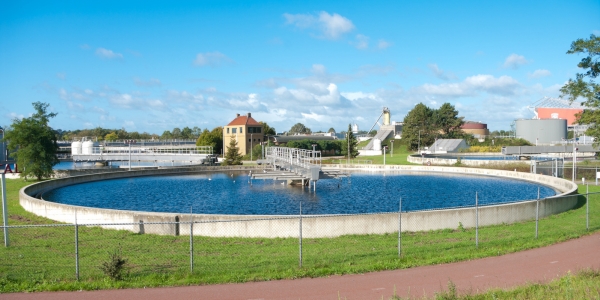
A Zero Liquid Discharge (ZLD) system for automobile manufacturing plants treats wastewater, recovers reusable water, and eliminates liquid effluent discharge from the facility. By combining advanced treatment technologies, ZLD helps automobile manufacturers reduce freshwater consumption, comply with environmental regulations, and manage wastewater generated during production processes.
Automobile manufacturing plants use water at nearly every stage of production: surface cleaning, phosphating, electrocoating, paint booth scrubbing, rinsing, machining, cooling towers, boilers, and floor washing. Once that water carries oil, grease, suspended solids, metals, phosphate, paint residue, detergents, salts, or organic load, it becomes more than a disposal issue. It affects compliance, operating cost, production reliability, and local water security.
A Zero Liquid Discharge System gives automobile manufacturers a structured way to treat wastewater, recover usable water, and reduce liquid discharge to zero or near zero based on the approved design. Instead of treating effluent only for release, ZLD focuses on internal reuse.
This blog explains what ZLD means, why automobile wastewater treatment is complex, how the zero liquid discharge process works, and where ZLD in Automobile Industry operations delivers value.
A Zero Liquid Discharge System is an integrated treatment setup that processes industrial effluent so that reusable water is recovered and no liquid wastewater is released outside the plant boundary. The remaining waste is managed as sludge, salts, or solid residue through approved handling routes.
In simple terms, ZLD changes the question from “Can this wastewater meet discharge limits?” to “How much of this wastewater can be recovered and safely reused?”
For an automobile plant, a ZLD system may include equalization, oil and grease removal, chemical treatment, biological treatment, filtration, reverse osmosis, evaporation, crystallization, sludge dewatering, recovered water storage, and a reuse distribution network.
Regulators and technical bodies often define ZLD as treating the full effluent quantity, reusing recovered water in process or utilities, and leaving only solids for approved handling. That matters because irrigation or gardening with treated effluent is not the same as true ZLD.
Automobile wastewater treatment is difficult because wastewater quality changes by production area. A paint shop rinse stream is different from machining coolant wastewater. Phosphating wastewater is different from floor wash water. Cooling tower blowdown carries salts, while boiler blowdown may carry heat and dissolved solids.
Common pollutants include:
1. Lower Freshwater Withdrawal
Recovered water can be reused in cooling towers, utility washing, flushing, certain rinse stages after quality checks, and scrubber makeup. High-purity reuse may also be possible after polishing. This reduces dependence on borewell water, municipal water, tanker supply, or external industrial water networks.
2. Better Regulatory Readiness
Automobile plants often operate under strict consent conditions from pollution control authorities. ZLD helps facilities prepare for tighter discharge limits, water-scarce zone requirements, and industrial estate rules. It also reduces risk linked with drain monitoring and accidental non-compliance.
3. Reduced Environmental Risk
When wastewater is discharged, even treated discharge can carry residual contaminants if the system is unstable or overloaded. ZLD reduces the volume of liquid leaving the site and helps protect drains, soil, groundwater, and surface water from salts, metals, oil, and phosphate.
4. Better Water Accounting and ESG Reporting
Many automobile manufacturers now publish water targets, water intensity per vehicle, and recycling rates. A ZLD plant makes water accounting more measurable because inflow, recovered water, reject, sludge, and reuse can be tracked through meters and daily logs.
5. Resource Recovery Possibilities
Some ZLD systems can recover salts, process water, and sometimes chemicals, depending on stream quality. Not every recovered solid has reuse value, but careful segregation can improve disposal planning and reduce hazardous waste volume.
Equalization tanks balance flow and pollutant load. Oil skimmers, API separators, dissolved air flotation, or coalescing separators remove free and dispersed oil. Chemical demulsification may be needed for stable coolant emulsions.
Chemical treatment addresses suspended solids, phosphate, color, and metals through pH correction, coagulation, flocculation, precipitation, and clarification. Metals are converted into removable solids, while paint particles and phosphate are separated with sludge.
If the wastewater contains biodegradable organic matter, biological treatment can reduce BOD and part of COD. Plants may use activated sludge, MBBR, MBR, or similar systems based on space, load, and reuse goals.
Pressure sand filters, activated carbon filters, ultrafiltration, and cartridge filters remove fine solids before reverse osmosis. RO separates dissolved salts from water. Permeate goes to reuse, while reject moves to further concentration. RO recovery depends on TDS, hardness, silica, organics, and temperature.
RO reject or high TDS wastewater is sent to a multi-effect evaporator, mechanical vapor recompression unit, agitated thin film dryer, crystallizer, or solar evaporation system where suitable. The aim is to recover more condensate and convert dissolved solids into crystals, sludge, or dry cake. The condensate is polished and reused; solids are sent for approved handling.
Recovered water must match its reuse application. Cooling towers need controlled hardness, silica, TDS, and biological activity. Paint shop rinses may need stricter conductivity and particle control. Boiler feed needs high purity. A good design matches treated water quality with the right reuse point rather than sending all recovered water to one common tank.
Paint Shop and Pretreatment Lines
Paint shops are among the most water-sensitive areas in a vehicle plant. Wastewater from degreasing, phosphating, electrocoat rinses, paint booth scrubbers, and cleaning activities may carry metals, phosphate, solvents, resins, and color. ZLD helps recover rinse water and control sludge-rich streams.
Machining and Component Manufacturing
Engine, transmission, casting, forging, and component plants produce oily wastewater, coolants, metal fines, and cleaning chemicals. A ZLD-based approach can combine oil separation, chemical treatment, membranes, and evaporation for difficult coolant wastewater.
Utility Systems
Cooling tower blowdown, boiler blowdown, DM plant reject, softener regeneration waste, and RO reject can contribute high TDS loads. These streams are often good candidates for segregated collection and brine concentration.
Vehicle Washing and Final Assembly
Vehicle washing, leak testing, floor cleaning, and equipment washdown produce wastewater with detergents, solids, oil, and variable COD. Treated and polished ZLD water can often return to non-critical wash or utility use after quality checks.
Zero Liquid Discharge for automobile manufacturing plants is not just an end-of-pipe treatment method. It is a complete water management strategy that links production, utilities, compliance, reuse, and solid waste handling. A well-planned Zero Liquid Discharge System can reduce freshwater withdrawal, lower discharge risk, support regulatory compliance, and make automobile wastewater treatment more predictable.
The best results come from source segregation, accurate wastewater characterisation, strong pretreatment, high-recovery membranes, careful evaporator design, and clear reuse planning. For plants facing stricter water norms or rising water costs, ZLD in Automobile Industry operations can be a practical route to safer, cleaner, and more resilient manufacturing.
The main goal is to recover reusable water from industrial wastewater and prevent liquid effluent from leaving the plant. Only solids, sludge, or salts remain for approved handling.
Not in every region or for every plant. Requirements depend on local consent conditions, water-stressed location, industrial estate rules, discharge limits, and regulator directions. Even where it is not mandatory, many plants adopt ZLD to reduce risk and freshwater demand.
Yes, but only after strict quality checks. Paint shop reuse may need low conductivity, low particles, low oil, and stable chemistry. Many plants use recovered water first in utilities before sending it to high-sensitivity processes.
Water recovery depends on wastewater quality, TDS level, treatment design, and reuse planning. Many well-designed ZLD systems recover a major share of wastewater as reusable water, while the remaining concentrated reject is converted into sludge, salt, or dry residue.
The main cost factors include wastewater volume, TDS concentration, oil and grease load, chemical consumption, membrane replacement, evaporator energy use, sludge handling, automation level, and operator skill requirements.
Yes. Heavy metals such as zinc, nickel, chromium, iron, and copper are usually removed through pH correction, chemical precipitation, coagulation, clarification, filtration, and sludge dewatering before membrane or evaporation stages.